How to Organize Your Home Ideas So You Finally Know Where to Start
Organizing your home ideas starts with one capture spot, then sorting and prioritizing, so you stop second-guessing and finally know what to do next.
To organize your home ideas, get every idea out of your head and into one place, sort them into clear categories, then rank them so you always know the next project to start. The reason your home feels stuck is almost never a lack of ideas. As of June 2026, it is usually too many ideas with no system to hold them, so every decision feels heavier than it should. Once your ideas live in one organized spot, the overwhelm settles and progress finally feels possible.
Key Takeaways
Table of contents
- What does it mean to organize your home ideas?
- Why do scattered home ideas keep you stuck?
- How do you get every home idea out of your head and into one place?
- How do you sort and clarify your home ideas?
- How do you decide which home project to tackle first?
- How do you take action without losing momentum?
- What tools keep your home ideas organized long-term?
- Frequently Asked Questions
- Final Thoughts on Organizing Your Home Ideas
Disclaimer: This post contains affiliate links. To read more, check out our disclosure policy. As an Amazon Associate, I earn from qualifying purchases

I have been there. After teaching high school math for 15 years, I thought I had systems down to a science. But my home projects? Total chaos. Endless ideas, no clear place to start.
What does it mean to organize your home ideas?
Organizing your home ideas means moving every decorating and project idea out of your head, your camera roll, and your scattered Pinterest boards into one structured place you actually trust. It is the difference between a pile of sticky notes and a real plan.
Most of us treat ideas like we will remember them. We save a paint color, screenshot a shelf, pin a mudroom, and assume it will all come back when we need it. It rarely does. That mental juggling is exhausting, and it quietly keeps you from starting.
When your ideas have a home, your brain gets to put them down. That is the first relief most women feel the moment they set this up.
Why do scattered home ideas keep you stuck?
Disclaimer: This post contains affiliate links. To read more, check out our disclosure policy. As an Amazon Associate, I earn from qualifying purchases
Scattered ideas keep you stuck because every project competes for your attention at once, and your brain reads that as pressure instead of possibility. You are not indecisive. You are overloaded.
This is not just a feeling. A UCLA study of real family homes found that mothers living with more visible clutter had higher levels of cortisol, the hormone tied to chronic stress (UCLA Center on Everyday Lives of Families, 2012). Mental clutter works the same way. The more unsorted ideas you carry, the heavier each decision feels.
There is a quiet cost too. When you keep making decisions without a plan, it does not just waste money. It slowly teaches you not to trust yourself, so the next choice feels even harder.
How do you get every home idea out of your head and into one place?
Start by capturing everything in a single spot before you try to organize any of it. The goal of this first pass is volume, not order. Write down every idea, project, and to-do floating around in your mind, from a running list of decor swaps to a full room makeover.
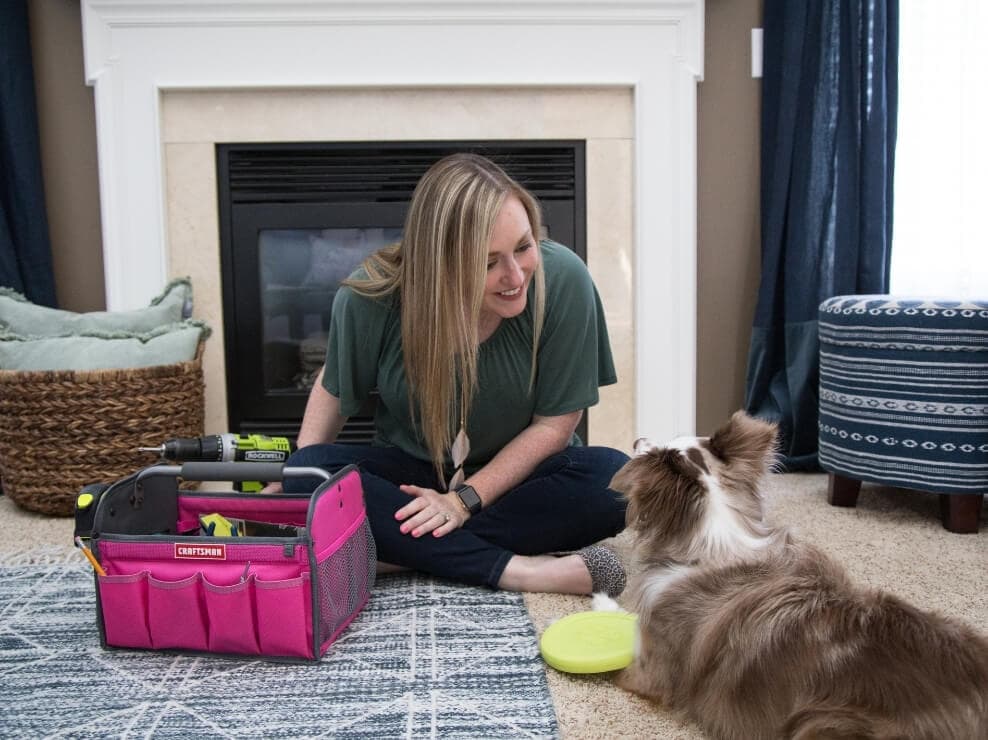
Use one capture spot you will actually return to, whether that is a note on your phone, a simple spreadsheet, or a Trello board. The format matters far less than picking one and only one. A scattered system is what got you here.
This step alone is powerful, because so much of the overwhelm comes from trying to remember it all. The average person already loses about 2.5 days a year hunting for misplaced things (Pixie, 2017), and unsorted ideas drain you the same quiet way.
How do you sort and clarify your home ideas?
Once everything is captured, sort and clarify it by grouping similar ideas so the giant list starts to make sense. Cluster by room, by type of project, or by season, whatever feels most natural to how you think about your home.
As you sort, you will notice some ideas are actually the same idea wearing three different outfits, and others were never really yours to begin with. Clarifying lets you keep what fits your real life and quietly release the rest. If a mood board helps you see a room come together, my guide on how to create a mood board for your room makeover walks you through it.
This is also where a whole-home view pays off. Sorting your ideas against a simple plan keeps your rooms connected instead of each one going its own direction.
How do you decide which home project to tackle first?
Decide what to tackle first by ranking your sorted ideas against three simple filters: impact, effort, and timing. Impact is how much daily life or calm the project adds. Effort is the money, time, and energy it takes. Timing is whether now is genuinely the right season for it.
The project that scores high on impact and low on effort is almost always your best starting point. It builds momentum without draining you, and momentum is what carries you to the bigger projects later. For a deeper framework, my post on how to prioritize projects at home breaks this down step by step.
Prioritizing also protects your wallet. Fully 78% of homeowners went over budget on their last project (U.S. News, 2024), and a lot of that comes from starting without a clear plan. Choosing one focused project first is how you avoid that scramble.
Related: 3 Simple Steps to Creating a Home Decorating Plan
How do you take action without losing momentum?
Take action by working one prioritized project at a time and resisting the pull to jump to the next shiny idea. Single focus is what turns a list into a finished room.

Keep your idea vault open as you go, so any new inspiration that strikes gets parked in the right category instead of derailing your current project. This is the move that finally stops the start-and-stop cycle. You are not ignoring new ideas, you are just not letting them interrupt.
Steady focus also keeps procrastination at bay. It is part of why 7 in 10 Americans say an organized home helps them feel more productive (Talker Research, 2024). One project, fully finished, does more for your confidence than five projects half-done.
What tools keep your home ideas organized long-term?
The best long-term tool is a simple, repeatable system you can keep using, not a one-time burst of organizing. A categorized digital vault, a recurring monthly review, and a single capture spot will carry you for years.
This is exactly why I created the Dream Home Idea Vault Workshop, which teaches my CONFIDENT method for going from stuck to taking action, and includes a Trello template and workbook so the system is built for you. It keeps every idea logged, sorted, and ready without the mental clutter.
You do not need anything fancy to start. You just need one place that holds it all, and a rhythm for checking in.
Helpful Tools
- Dream Home Idea Vault Workshop … teaches the CONFIDENT method and comes with a Trello template and workbook to capture, sort, and prioritize every home idea in one place.
Frequently Asked Questions
Open one note or spreadsheet and brain-dump every idea you can think of in ten minutes. You can sort and prioritize later, but getting it all in one place first is what lifts the overwhelm.
Anywhere you will actually return to: a phone note, a spreadsheet, or a Trello board. The one rule is to pick a single spot so your ideas stop living in five different places.
Work one prioritized project at a time and park new ideas in your vault instead of chasing them. Finishing one room builds the momentum and confidence that carry you to the next.
A quick monthly review is plenty. It keeps your list current, lets you re-rank as life changes, and makes sure nothing important gets buried.
Final Thoughts on Organizing Your Home Ideas
Before I had a system, I was drowning in ideas with a half-finished living room and a stalled kitchen. Once I captured, sorted, and prioritized, everything changed, and the projects I had dreamed about finally got done. You do not need to organize it all today. Start with one ten-minute brain-dump, and when you want support while you make steady progress, come join the community and work alongside other women doing the same thing.
About the Author

Christin Cieslarski is the founder of My Homier Home and the creator of the Confident Decorating® method. She helps busy women go from stuck and second-guessing to calm, confident, and actually making progress on their homes… one steady step at a time.
Last Updated:
More Organizing & Planning
If you enjoyed this post, make sure to pin the image below for reference later!