How to Choose a Christmas Color Palette for Your Home
Choose a Christmas color palette that flows with your home. A simple 3-color method that works with your walls, rugs, and furniture, plus 6 palettes to try.
To choose a Christmas color palette, start with the colors that stay in your room all year, like the walls, sofa, and rug. Then pick one main holiday color, one supporting color, and one metal finish. If you have ever opened your bins and found gold ornaments, silver ribbon, and three different reds fighting each other, you are in very good company.
Key Takeaways
Table of contents
- Why doesn’t your Christmas decor feel cohesive?
- How do you choose a Christmas color palette that works with your home?
- How many colors should a Christmas color palette have?
- What Christmas colors go with gray, beige, white, navy, or green rooms?
- What are 6 Christmas color palettes that feel timeless?
- How do you use the decor you already own with a new palette?
- Can you mix metals and still keep it cohesive?
- Frequently Asked Questions
- Final Thoughts on Choosing Your Christmas Color Palette
Disclaimer: This post contains affiliate links. To read more, check out our disclosure policy. As an Amazon Associate, I earn from qualifying purchases

Why doesn’t your Christmas decor feel cohesive?
Christmas decor feels random when it is bought by trend instead of chosen to fit the room. The usual culprits are too many colors, mixed metals with no plan, and decor that ignores the colors already in the space.
The National Retail Federation forecast that 2025 holiday sales would top a trillion dollars for the first time. That much seasonal shopping makes it easy to end up with gold one year, silver the next, and pieces that never quite match.
If your bins feel like a mix of everything, the Christmas Prep Library has planning templates that help you sort what you own before you buy anything new.

How do you choose a Christmas color palette that works with your home?
Disclaimer: This post contains affiliate links. To read more, check out our disclosure policy. As an Amazon Associate, I earn from qualifying purchases
Choose a Christmas color palette in four steps: name the colors that stay, pick a main holiday color that is friendly with them, add a supporting color, and choose one metal and one wood tone. This is the same start-with-what-stays thinking we use in the Confident Decorating® method.
Step 1: Name the colors that stay
List the colors you do not change for Christmas, such as wall color, sofa, curtains, and rug. These are the fixed points your palette has to work with, and how to create a whole home color scheme walks through mapping them.
Step 2: Pick a main holiday color
Choose the one color that will show up most. Warm rooms welcome cranberry or rust, and cool rooms look best with deep green or blue. Our guide to choosing home color basics explains undertones in plain language.
Step 3: Add a supporting color
Pick one supporting color like cream, sage, or flax to tie the main color to your room.
Step 4: Choose one metal and one wood tone
Choose brass, silver, or black as your lead metal, plus one wood tone such as walnut or natural pine.

How many colors should a Christmas color palette have?
A Christmas color palette should have three colors plus one metal. The classic 60-30-10 rule from Homes and Gardens splits a room into 60% dominant color, 30% secondary color, and 10% accent color.
In holiday terms, greenery and neutrals are your 60, since garland, the tree, and your existing walls do most of the visual work. Your supporting color is the 30, and your main holiday color plus a metal is the 10. Designer David Harris of Andrew Martin says the accent is there “to contrast and complement your décor scheme.”
That split is why a small pop of red can carry a whole room.
What Christmas colors go with gray, beige, white, navy, or green rooms?
The best Christmas colors match the undertone of your room, so start from your walls and furniture. The table at the end of this section sums it up.
Gray rooms
Cool gray looks crisp with deep green, cream, and silver. Warm gray leans toward blush, sage, and champagne.
Beige rooms
Warm red, forest green, and brass share beige’s yellow undertones.
White rooms
Try black, natural greenery, and wood for a modern look, or cranberry and gold for a classic one.
Navy rooms
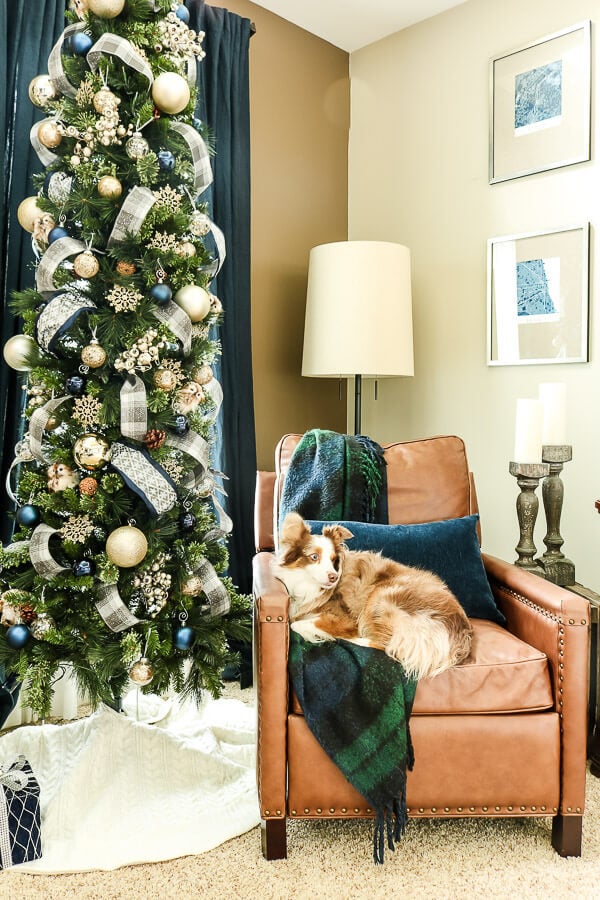
This is my own situation. I do not like changing curtains and rugs for the holidays, so I needed a Christmas palette that goes with navy. Classic red and green with a touch of navy, as in my modern vintage Christmas home tour, was the answer, and the Christmas color schemes round-up has more navy-friendly options.
Green rooms
Pair green walls with cream, warm wood, and soft red, and let the walls act as your greenery.
| Room color | Try this palette | Metal |
|---|---|---|
| Gray | Deep green, cream, silver | Silver |
| Beige | Warm red, forest green, cream | Brass |
| White | Black, greenery, natural wood | Black or brass |
| Navy | Red, green, white, a touch of navy | Gold |
| Green | Cream, soft red, walnut | Brass |
What are 6 Christmas color palettes that feel timeless?
Six palettes that hold up year after year are Classic, Cozy Cabin, Soft Neutral, Snowy Blue, Vintage, and Modern Natural. Pick the one that matches your fixed colors from the table above.
- Classic: red, green, cream, and brass.
- Cozy Cabin: plaid, deep green, and warm wood.
- Soft Neutral: cream, flax, and champagne.
Pantone named soft white Cloud Dancer its 2026 Color of the Year, a nod to how calming quiet neutrals feel. - Snowy Blue: navy, white, and silver.
- Vintage: muted red, sage, blush pink, and gold.
A 2025 Pooky research report based on search volume found vintage decor drew about 176,800 searches, more than any other style it tracked. - Modern Natural: black, white, and greenery.
For full inspiration photos of each look, see Christmas color schemes, and keep this post as your method for choosing between them.
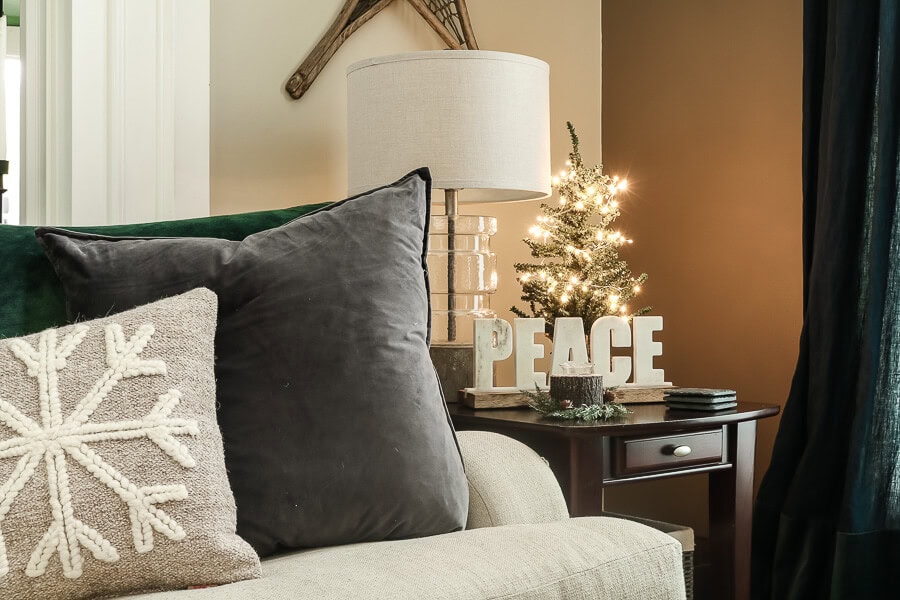
How do you use the decor you already own with a new palette?
Use what you own by sorting your bins by color, keeping the pieces that fit, and moving the rest to a separate space. You do not need to start over, and no random stuff has to make the cut on your main tree.
Group everything into piles by color and keep the pieces that match. Off-palette ornaments can go on a kid’s tree or a basement tree, where mismatched is part of the charm.
Ribbon is the cheapest way to recolor a tree, since one ribbon in your main color pulls mixed ornaments together. Our skinny tree ribbon tutorial shows the technique.
According to the YouGov December 2025 survey, 57% of Americans with a tree use colored lights and 36% use white. Whichever you own, let ribbon and ornaments carry the palette.
Can you mix metals and still keep it cohesive?
Yes, you can mix metals when you choose one lead metal and one accent metal, and repeat each at least three times. Repetition is what makes the mix look intentional.
Say brass is your lead. Use it on candlesticks and ornaments, then add silver in three places. Matte black works as a neutral with either. The full method is in 3 tricks to mixing metals in your home decor.
Helpful Tools
- Christmas Prep Library … Planning templates, decorating guides, and checklists that help you sort your decor and plan your palette before the season gets busy.
Frequently Asked Questions
No, red and green are still the most familiar Christmas colors, and they work in neutral homes when you choose softer shades like cranberry and sage.
Classic red, green, cream, and brass is the most familiar, and vintage-inspired palettes are drawing more interest.
They should share the same main color and metal, but each room can use them in different amounts.
Yes, as long as the tree palette shares at least one color or your lead metal with the rest of your decor.
Cream or natural linen ribbon works with nearly every palette because it reads as a neutral.
Final Thoughts on Choosing Your Christmas Color Palette
A cohesive Christmas needs a plan for the pieces you already have, not new decor. Start with what stays, keep to three colors and one metal, and remember that progress beats perfection. If you want a simple way to plan the whole season, the Christmas Prep Library is a good place to begin.
About the Author

Christin Cieslarski is the founder of My Homier Home and the creator of the Confident Decorating® method. She helps busy women go from stuck and second-guessing to calm, confident, and actually making progress on their homes… one steady step at a time.
Last Updated:
More Decorating Help
If you enjoyed this post, make sure to pin the image below for reference later!